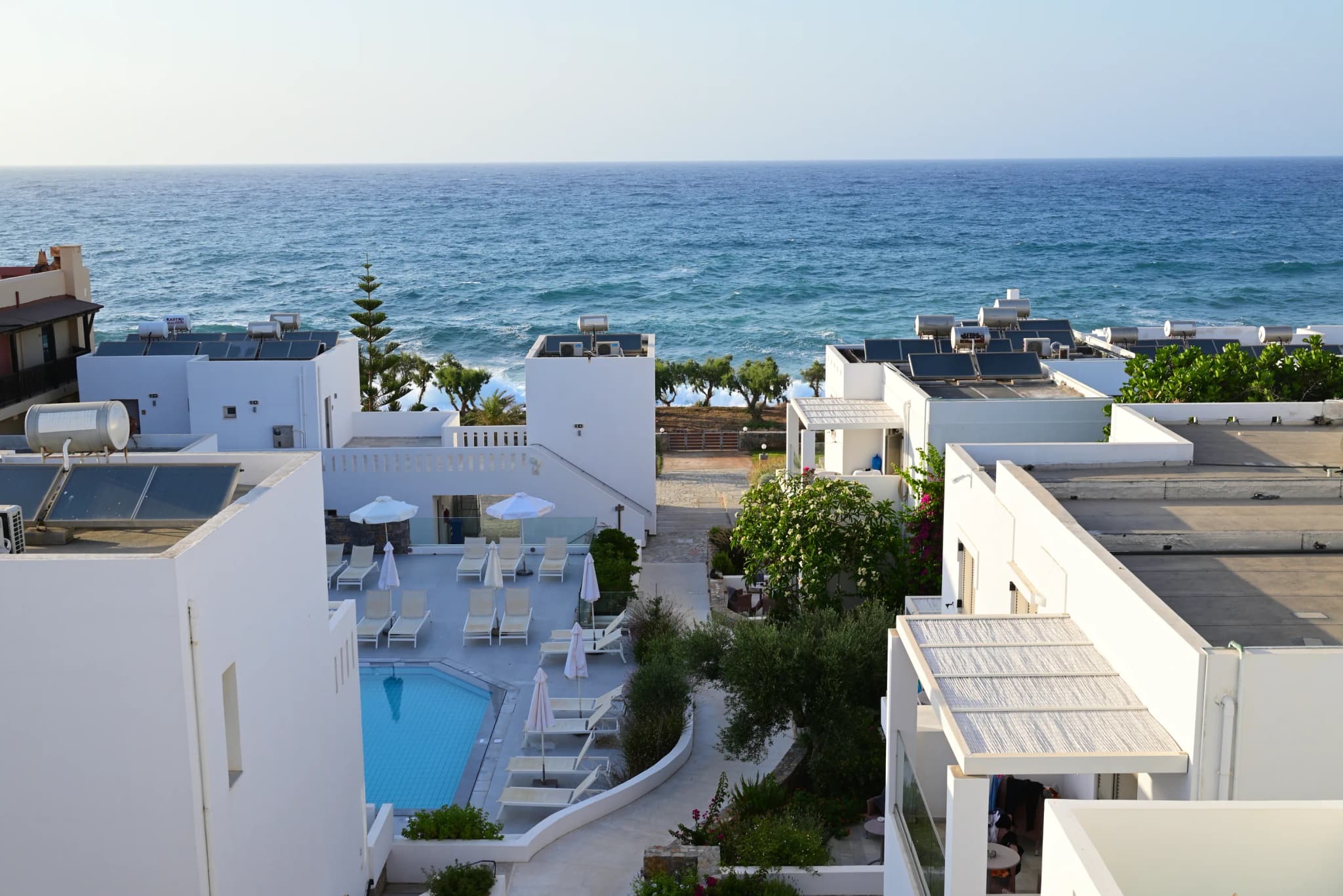








Greece attracts American citizens with its relaxed Mediterranean lifestyle and lower cost of living. Many also choose Greece to establish a stable long-term base in Europe, benefit from asset protection, and enjoy easier travel within the Schengen Area.
Today, more than 20,000 US citizens are estimated to live in Greece permanently.
Americans have several legal pathways to move to Greece, including residency by investment, the so-called Golden Visa.
Who most often moves from the US to Greece?
Moving from the United States to Greece may appeal to Americans who are looking for a long-term base in Europe, a slower pace of life, and a clear legal framework for stays beyond the 90-day limit in the Schengen Area.
In practice, this decision is most often made by the following groups, each with its own motivations:
- Investors using Greece as a European base. Typically motivated by portfolio diversification and asset protection, with residence status viewed as an additional benefit alongside investments in real estate, funds, or businesses[1].
- Retirees and financially independent individuals. Often seeking a stable European residence to spend part of the year in Greece after retirement, travel freely across Europe, and purchase personal property in a predictable legal environment.
- Spouses and close family members of Greek citizens or residents. Individuals planning marriage or family reunification often aim to secure joint residence in Europe and facilitate cross-border mobility between the US, Europe, and other regions.
- Remote employees and freelancers. Professionals working for non-Greek companies who prefer a more comfortable living environment, while maintaining income from abroad and securing legal long-term residence.
- Individuals leaving the US due to social pressure or discrimination. Some applicants cite experiences of racism or social tension in the US, as well as a high-pressure lifestyle. They consider relocation to Southern Europe as a way to live in a more socially comfortable and balanced environment.
- Students pursuing education in Greece. Applicants enrolling in Greek educational institutions as a pathway to legal residence and longer-term integration in Europe.
- Professionals with job offers in Greece. Specialists relocating for employment who obtain residence through a local employer and integrate into the Greek labour market.
Key advantages for US citizens include visa-free short stays in the Schengen Area, multiple legal pathways to long-term residency, and the opportunity to establish a haven in the EU.
For many Americans, Greece also offers a more balanced pace of life, a socially comfortable environment, options for family relocation, and the ability to combine residence planning with investment goals, while maintaining personal and economic ties to the United States.
Trusted by 10,000+ investors
Thinking of leaving the USA? Discover your options
Grounds to move to Greece from the United States
For stays longer than 90 days, US citizens generally need a National D visa first and then apply for a residence permit after arrival, following the procedure set by Greek authorities and the local Decentralized Administration.
Main residence routes for Americans include residence permits by investment, financially independent status, digital nomad status, employment, study, and family reunification.
Investment
Americans may obtain a residence permit in Greece by applying for the Greece Golden Visa[2]. The most commonly chosen route is real estate investment.
The threshold depends on the property type and location:
- €800,000 for properties in Attica and Thessaloniki, on Mykonos and Santorini, and on islands with a population of more than 3,100 people;
- €400,000 for properties in other regions of Greece;
- €250,000 for properties purchased for renovation or conversion into residential use.
Applicants may invest in residential or commercial real estate as individuals or through a legal entity. Properties with a value of €400,000 or €800,000 must have a minimum area of 120 m². It is not allowed to purchase several properties under the Golden Visa; just one.
Although real estate remains the most common route, the Greece Golden Visa also allows several investment options that do not involve purchasing property:
- Long-term hotel or tourist lease — €400,000. Investors enter a long-term lease of a hotel or tourist accommodation registered in Greece for a minimum of 10 years.
- Tourist residence timeshare — €400,000. Applicants conclude a timeshare agreement for tourist accommodation, which grants usage rights for a defined period each year.
- Real estate acquired through inheritance or gift — €400,000. Property received through inheritance or gift qualifies for the Golden Visa if it meets all program requirements, is free of encumbrances, and is registered in the applicant’s name.
- Shares in investment funds — €350,000. Investors purchase shares in licensed funds that invest exclusively in Greek assets and hold at least €10 million in assets.
- Fixed-term bank deposit — €500,000. Applicants place a fixed-term deposit of at least €500,000 with a Greek bank for at least one year, with automatic renewal.
- Greek government bonds — €500,000. Investors acquire government bonds with a minimum maturity of three years through an authorised bank or licensed investment institution.
- Investment in Greek companies — €500,000. Investors buy shares in companies registered or operating in Greece, including real estate development firms or venture capital entities.
- Portfolio of listed shares or bonds — €800,000. High-net-worth individuals may invest in corporate shares or government bonds listed on a regulated market, favouring liquid and tradable assets.
Passive income
The financially independent person visa, often referred to as a retirement visa, is available to non-EU and non-EEA citizens of any age who have a stable passive income of at least €3,500, or approximately $3,600, per month.
The income must originate outside Greece and may include pensions, trust income, or other non-employment sources. As an alternative to monthly income, applicants may place a deposit of at least €48,000, or close to $50,000, in a Greek bank.
It is allowed to include family members in the application. In this case, the required income increases by 20% for a spouse and by 15% for each dependent child under 21.
The initial residence permit is issued for three years and may be renewed every three years as long as the financial requirements continue to be met.
Remote work
The digital nomad visa is designed for foreigners who live in Greece while working remotely for employers or clients based outside the country.
To qualify, applicants must earn at least €3,500, or more than $3,600, per month after taxes from non-Greek sources. Holders of this permit are not allowed to work for or provide services to Greek companies.
The minimum income requirement rises to about $4,300 per month when a spouse is included, to $4,970 for a family of three, and by 15% for each additional family member.
Employment
Foreign nationals who receive a job offer from a Greek employer may apply for a residence permit for employment. The employer must demonstrate that no suitable candidate from the EU or EEA is available for the position and obtain approval from the Decentralized Administration.
The application includes the following documents:
- completed application form;
- valid passport with a National D visa;
- passport-sized photographs;
- proof of accommodation in Greece;
- medical insurance;
- health certificate issued by a state hospital;
- an employment contract;
- Tax Identification Number;
- Social Security Number;
- proof of sufficient financial means;
- confirmation of payment of the €300 state fee.
The work residence permit is issued for an initial period of two years. It may be renewed for three years if the employment continues and the renewal application is submitted at least 60 days before the permit expires.
Study
Students enrolled in full-time programmes at recognised Greek universities, colleges, or other educational institutions may apply for a residence permit for study purposes.
In addition to standard documentation such as a passport, proof of accommodation, and medical insurance, applicants must demonstrate sufficient financial means to cover tuition fees and living expenses. The minimum monthly amount required for living expenses is €400.
Student residence permits are usually issued for one year and may be renewed annually, provided the enrollment and financial conditions remain unchanged.
Family reunification
Family members of Greek citizens or legal residents may apply for a residence permit under family reunification rules.
If the sponsor is a Greek resident rather than a citizen, they must have lived in Greece for at least two years before starting the reunification process.
Eligible family members include a spouse over the age of 18 and unmarried minor children. Applications must include a family status certificate and evidence that the sponsor can financially support all family members.
Residence permits for family members are generally issued for the same period as the sponsor’s permit. If the sponsor holds long-term resident status, the permit is valid for up to two years. Children born in Greece to foreign parents and spouses of Greek citizens are eligible for residence permits valid for five years.
Greek residence permits comparison

How to move to Greece from the US with a Golden Visa: a step-by-step guide
As per the experience of Immigrant Invest specialists, the process of obtaining a Greece Golden Visa can take at least 4 months. While many steps can be completed remotely, some require an in-person presence or certified legal representation.
Compared to other residence permit routes, this procedure is generally more straightforward, with processing times typically starting from 6 months.
1 day
Preliminary Due Diligence
Immigrant Invest’s certified Anti Money Laundering Officer conducts a preliminary Due Diligence check to spot possible issues for the potential applicant. The procedure is mandatory and confidential. The investor only needs to provide a passport at this point.
Immigrant Invest’s certified Anti Money Laundering Officer conducts a preliminary Due Diligence check to spot possible issues for the potential applicant. The procedure is mandatory and confidential. The investor only needs to provide a passport at this point.
1 week
Preparation of documents
Layers fill out government forms and compile a list of documents the applicant needs to submit. The investor gathers the documents and signs a power of attorney authorising the lawyer to act on their behalf in Greece.
Layers fill out government forms and compile a list of documents the applicant needs to submit. The investor gathers the documents and signs a power of attorney authorising the lawyer to act on their behalf in Greece.
Up to 1 week
Obtaining a tax number
This is an essential procedure allowing the applicant to successfully make the investment. The lawyer submits an application and documents for the tax number registration. Typically, the number is issued within seven working days.
This is an essential procedure allowing the applicant to successfully make the investment. The lawyer submits an application and documents for the tax number registration. Typically, the number is issued within seven working days.
1—3 months
Investment
The applicant makes the investment according to the path chosen beforehand, whether it is real estate, fund units, government bonds, business investments, or bank deposits.
The applicant makes the investment according to the path chosen beforehand, whether it is real estate, fund units, government bonds, business investments, or bank deposits.
1 day
Applying for a Golden Visa
After the investment condition is met, documents are submitted online via the official website of the Greek migration service. The applicant receives a certificate, allowing them to stay in Greece for one year while a decision on the residence permit is made.
After the investment condition is met, documents are submitted online via the official website of the Greek migration service. The applicant receives a certificate, allowing them to stay in Greece for one year while a decision on the residence permit is made.
1 day
Submission of biometrics
Applicants need to submit their biometrics, such as fingerprints and photographs. They can do it 1—2 weeks after submitting the residency application.
The biometric procedure must be completed within 6 months of the date of the residency application and before the expiry of one year.
Applicants need to submit their biometrics, such as fingerprints and photographs. They can do it 1—2 weeks after submitting the residency application.
The biometric procedure must be completed within 6 months of the date of the residency application and before the expiry of one year.
1—2 months
Receiving residence permit cards
After the application is processed and approved, the investor can collect the residence permit card personally or through an authorised lawyer.
Upon receiving residence permits, the investor presents their international passport and returns the certificate of application for the residence permit.
After the application is processed and approved, the investor can collect the residence permit card personally or through an authorised lawyer.
Upon receiving residence permits, the investor presents their international passport and returns the certificate of application for the residence permit.
Every 5 years
Residence permit renewal
Residence permits are initially valid for 5 years. Applications and the required documents to renew them should be submitted within two months before the expiry of the current permit. The investor maintains ownership of the property or other investment assets.
Residence permits are initially valid for 5 years. Applications and the required documents to renew them should be submitted within two months before the expiry of the current permit. The investor maintains ownership of the property or other investment assets.
How much does it cost to live in Greece for American citizens?
Overall, living expenses in Greece are around 35% lower than in the United States[2]. Average monthly costs for a single person are estimated at $820 in Greece, compared to more than $1,150 in the US. For a family of four, monthly expenses are roughly $2,800 in Greece, versus over $4,000 in the United States.
Housing costs, particularly rent, are significantly lower in Greece. Everyday expenses such as groceries, utilities, Internet services, and public transportation are also generally more affordable.
Rental prices vary by location. In Athens, monthly rent typically starts at around $520 for a one-bedroom apartment and $920 for a three-bedroom apartment. In Thessaloniki, comparable rents are about $410 and $660, while in Heraklion they start at approximately $360 and $730, respectively.
Average expenses in Greece and the US
How are Americans taxed in Greece?
How are Americans taxed in Greece?
Taxation in Greece depends on an individual’s tax residency status and income structure. American citizens who spend at least 183 days per year in Greece are considered Greek tax residents and are generally required to pay taxes there.
Avoiding double taxation
Even after moving to Greece, American citizens remain subject to US tax reporting requirements. US citizens, even if living abroad, still must file a federal tax return each year.
At the same time, Greece and the US have a double taxation treaty, which helps prevent the same income from being taxed twice. US taxpayers may reduce their US tax liability by submitting Form 1116 Foreign Tax Credit to the IRS as part of the annual federal tax return for taxes paid in Greece[3].
This mechanism allows Greek income taxes paid to be credited against US federal tax on the same income, subject to IRS rules and limitations.
Non-domicile tax regime
Foreign nationals who transfer their tax residency to Greece may qualify for the non-domicile regime, which allows them to pay a fixed annual tax of €100,000 on foreign-source income, regardless of the amount earned[4]. This regime may apply for up to 15 years.
To be eligible, applicants must invest at least €500,000 in Greek real estate, businesses, or transferable securities or shares in Greek legal entities. They must also not have been Greek tax residents for seven of the eight years preceding the change of tax residency.
Retiree tax regime
Foreign retirees moving to Greece may benefit from a reduced flat tax rate of 7% on their foreign pension income for up to 15 years. The tax is paid once per year, in a single instalment, by the end of July.
The 7% rate applies not only to pension income but also to other foreign income, including dividends, interest, and rental income.
Eligibility requires that the retiree has not been a Greek tax resident for at least five of the six years prior to relocating to Greece.
Personal income tax
Individuals who become Greek tax residents and do not apply for or qualify for the non-domicile regime are subject to Greece’s standard progressive personal income tax system. Greece applies a progressive personal income tax system, with rates ranging from 9 to 44%.
Personal income tax rates on worldwide income in Greece are as follows:
- €0—10,000 — 9%;
- €10,001—20,000 — 22%;
- €20,001—30,000 — 28%;
- €30,001—40,000 — 36%;
- €40,001 and above — 44%.
Best places for US citizens to live in Greece
Greece offers a wide range of living environments, from large metropolitan centres to islands and rural regions. The choice often depends on lifestyle preferences, budget, access to services, and proximity to international transport links.
Athens
As the country’s political and economic centre, this destination attracts many expats due to its historical heritage, cultural diversity, and broad range of employment opportunities. Residents benefit from well-developed healthcare services, international schools, and an active cultural scene, as well as jobs in education, business, and technology.
World-famous landmarks such as the Acropolis and the Parthenon are part of everyday life. However, a steady flow of visitors throughout the year can be a drawback for those seeking a quieter living environment.
Thessaloniki
Located in northern Greece, this city offers a high quality of life while being less crowded and generally more affordable than the capital. Modern infrastructure, employment opportunities, and a growing technology sector make it an attractive option for long-term residence.
It often appeals to expats who want an urban lifestyle combined with a slower pace, a strong cultural identity, and scenic coastal views.
Crete
With a warm climate year-round, this is the largest and most populous Greek island and one of the country’s most visited regions. Its long history as the centre of Europe’s earliest advanced civilisation adds to its appeal.
Many expats choose to settle in Heraklion or Chania. Heraklion is the island’s largest city and home to the second-busiest airport in Greece, while Chania is known for its beaches, Venetian-style harbour, and a growing American expat community.
The Peloponnese
Situated south-west of Athens, this predominantly rural region features a diverse landscape of beaches, olive groves, mountains, and coastal towns. It is well suited to those who prioritise outdoor activities such as hiking, cycling, and swimming.
Living costs are typically lower than in Athens or highly tourist-oriented islands like Mykonos and Santorini, with more affordable housing and day-to-day expenses.
The Cyclades
This island group includes some of Greece’s most recognisable destinations, such as Mykonos and Santorini. A strong tourism industry creates opportunities for expats interested in hospitality or real estate-related activities.
The international character of the Cyclades attracts residents from around the world, making it easier for Americans to integrate into established expat communities.

The island of Mykonos caters well to English-speaking tourists, with the language widely spoken in local public places
7 benefits of moving to Greece as an American citizen
Relocating to Greece offers Americans a combination of financial and lifestyle advantages. Below are the key benefits that most often influence the decision to move, based on cost considerations, everyday living conditions, and future opportunities in the European Union.
1. Stable European base and safe haven for families
Greece is regarded as a low-risk country for everyday life. International crime statistics show that intentional homicide rates in Greece remain below 1 per 100,000 people. Civilian firearm ownership is strictly regulated, and gun-related violence is comparatively rare, contributing to a sense of safety in daily public life.
While US passport holders already have visa-free access to the Schengen Area, this access is limited to 90 days within any 180-day period. Holding a Greek residence permit removes this constraint for time spent in Greece and allows unrestricted travel across the Schengen Area without tracking short-term stay limits.
2. Living costs up to 35% lower than in the US
Greece generally has a lower cost of living compared to the US, Greece generally offers a lower cost of living compared to the United States, particularly in housing, groceries, dining out, and transportation.
To maintain a similar standard of living, average monthly expenses are around $3,900 in Athens, compared to approximately $11,900 in New York City, over $7,000 in Tampa, Florida, or about $6,700 in Austin, Texas.
3. Pleasant climate all year round
Greece is known for its long summers and mild winters, making year-round outdoor activities possible for much of the year. In Athens, July, the hottest month, typically sees average highs around 91—92°F, with summer daytime temperatures often above 85°F from mid-June to mid-September, and occasional heatwaves pushing daytime readings near 100 °F or higher. Winter temperatures in January average around 50°F.
Greece enjoys a high number of sunny days — in many regions the annual total can approach 310 clear days, with intense sunshine and limited rainfall in summer.
Even though heatwaves occur, especially in July and August, seasonal north winds blow regularly from about mid-May through mid-September, providing cooling relief across the Aegean region and moderating peak temperatures while sustaining clear skies.
4. Slower pace of life, work-life balance
Daily life in Greece is strongly centred around social interaction and time spent together. Informal meetings in cafés, shared lunches, and evening gatherings with friends or family are a regular part of everyday routines.
Greek culture also places clear boundaries between work and personal life. Employees rarely stay late without necessity, and extended breaks during the day are common, especially outside major business centres.
Paid annual leave typically starts at around 20 working days per year, in addition to public holidays, and taking the full vacation is widely accepted rather than discouraged.
5. Easy travel across Europe from one base
Greece serves as a convenient base for travel across Europe and the Mediterranean, with short flights to major cities and cultural centres. Flights from Athens to Paris take around three hours, while travel to Rome takes just over two hours.
After obtaining Greek residency, Americans may stay in other EU or EEA countries for up to 90 days within any 180-day period without a visa.
6. EU citizenship opportunity after 7 years
Foreign nationals may apply for Greek citizenship after spending at least 183 days per year in the country for seven years.
Applicants must have no criminal record or deportations and pass a written exam covering the Greek language, culture, history, geography, and governance. Greece allows multiple citizenship, so Americans are not required to renounce their US nationality.
7. Living among the world’s richest historical landmarks
Greece is home to one of the world’s oldest civilisations, with recorded history dating back to the 8th century BC. Landmarks such as the Acropolis, Delphi, and Olympia reflect this legacy, while the Byzantine Empire and Ottoman period have also shaped modern Greek art, architecture, music, and cuisine.

The Acropolis of Athens is Greece’s most famous landmark, located on a limestone hill high above the capital city
Investor checklist for moving to Greece
Each investor’s circumstances differ in terms of family composition, tax status, and investment objectives. Working with an experienced advisor helps structure the process correctly and avoid unnecessary risks.
Before applying
For most investors, the process can be summarised into the following key steps:
- Define relocation and investment goals. Clarify whether the priority is residency, asset diversification, income generation, or long-term planning.
- Choose a qualified immigration and investment advisor. Work with a company that understands Greek migration law, investment rules, and compliance requirements, and coordinates the process locally.
- Select an eligible investment route. Choose the option that matches the budget, risk profile, and timeline.
- Complete the investment and submit the application. Finalise the transaction, apply for the Greece Golden Visa, and complete biometric procedures.
- Plan renewal and future status. Prepare for permit renewal and consider long-term residency or citizenship options.
Expert’s help
Immigrant Invest is an official representative of the Greece Golden Visa programme and provides end-to-end support, from selecting investment options to obtaining residence permit cards. Experts analyse individual goals and prepare a personalised relocation plan with a clear calculation of investment amounts, government fees, and related costs.
Immigrant Invest has been operating since 2006 and has assisted more than 10,000 investors and their family members in obtaining residency. The company applies an individual approach to each case and conducts preliminary Due Diligence before submission, reducing the risk of refusal.
As a result, 99% of applications prepared by Immigrant Invest receive approval, reflecting a consistently high success rate across investment programmes.
Additional services
We offer a wide range of additional services, including residency for newborns, adding family members, permit renewals, and bank account openings. We are also always ready to assist with other individual requests.
Potential drawbacks of moving to Greece from the US
While Greece offers many advantages for relocation, moving to another country also involves practical and everyday challenges. Understanding these factors in advance helps set realistic expectations and plan the transition more effectively.
Institutional bureaucracy
Administrative procedures in Greece can be time-consuming, particularly when it comes to visas, residence permits, and setting up essential services such as utilities or bank accounts. Public offices may operate with limited hours, provide inconsistent guidance, or require several in-person visits to complete standard procedures.
Healthcare access outside major cities
Although medical treatment in Greece is generally affordable, the public system can be overstretched, especially in regional and rural areas.
Waiting times may be longer, and access to specialised care can be limited. Many residents rely on private healthcare providers, which may involve additional insurance coverage or out-of-pocket costs.
Language requirements in everyday situations
While English is widely spoken, particularly in urban centres and tourist areas, knowledge of Greek is often necessary for everyday interactions. This is especially true in smaller towns and when dealing with public authorities.
The Greek language uses a different alphabet and has complex grammar, which can present a learning curve for newcomers.
Seasonal overcrowding in popular locations
Major destinations such as Athens, Mykonos, and Santorini experience significant tourist inflows during peak seasons. This can result in congestion, higher prices, and reduced availability of accommodation and services during certain months.
Infrastructure limitations in remote areas
Outside large cities like Athens and Thessaloniki, public transport networks are less developed. Some islands and rural regions may also face slower internet connections and occasional disruptions to essential utilities such as electricity or water.
Things to know about moving from the United States to Greece
- American citizens may enter Greece without a visa for short stays of up to 90 days within any 180-day period for tourism, business, or family visits.
- Stays exceeding 90 days require a National D visa, followed by an application for a residence permit within 30 days of arrival in Greece.
- Greece issues residence permits for various purposes, including employment, studies, family reunification, retirement, and investment.
- Through the Greece Golden Visa, US citizens may obtain a residence permit by investing in real estate or other assets. Depending on the property type and location, the required investment ranges from €250,000 to 800,000.
- Foreign nationals may apply for Greek citizenship after residing in the country for at least 183 days per year over a 7-year period. Applicants must demonstrate a clean criminal record and pass an examination covering the Greek language and cultural knowledge.
Immigrant Invest is a licensed agent for citizenship and residence by investment programs in the EU, the Caribbean, Asia, and the Middle East. Take advantage of our global 15-year expertise — schedule a meeting with our investment programs experts.
Source:
- Source: Greece Golden Visa, official website
- Source: Official Law 5038/2023: GRANTING RESIDENCE PERMITS FOR INVESTMENT PURPOSES
- Source: Greek Independent Authority for Public Revenue — Tax incentives for attracting new tax residents
- Source: Reporting foreign income, IRS
- Source: Cost of living in Greece vs US, Numbeo
 Trusted by 10,000+ investors